Discovering Chaoshan: A Journey Through China’s Cultural Treasure Trove
Nestled along the southeastern coast of Guangdong Province, the Chaoshan region—encompassing Chaozhou, Shantou, Jieyang, and Shanwei—is one of China’s best-kept cultural secrets. With a history spanning over 2,000 years, Chaoshan boasts a unique blend of ancient Chinese traditions, maritime heritage, and world-renowned cuisine that has captivated travelers from around the globe.
The Soul of Chaoshan: Gongfu Tea
If there is one ritual that defines Chaoshan culture, it is Gongfu Tea (工夫茶). Unlike casual tea drinking, Gongfu tea is a meticulous art form recognized as a National Intangible Cultural Heritage. The process involves eight precise steps—from warming the tiny purple clay teapot to pouring tea into thimble-sized cups—all designed to extract the purest flavor from premium oolong teas like Fenghuang Dancong.
In Chaoshan, tea is more than a beverage; it is a social philosophy. Every household, every shop, every office has a tea set. Three cups are always used regardless of how many guests are present—a symbol of sharing and humility. “Come, have some tea” is the universal greeting, the icebreaker, the peace offering, and the bond that connects generations of Chaoshan people.
A Culinary Paradise: The Food of Chaoshan
Renowned food critic Chua Lam once declared: “Chaoshan is a solitary island in the world of Chinese cuisine.” What makes Chaoshan food so extraordinary is its philosophy of respecting the natural flavors of ingredients with minimal processing.
Must-Try Dishes:
- Chaoshan Beef Hotpot (牛肉火锅): Freshly butchered beef sliced into over a dozen different cuts, each boiled for precisely 8-12 seconds and dipped in satay sauce. The neck cut (脖仁) melts like butter on the tongue.
- Raw Marinated Seafood (生腌): Known as the “heroin of Chaoshan cuisine” for its addictive quality, fresh crab, shrimp, and blood clams are marinated in garlic, chili, soy sauce, and fish sauce, creating a creamy, umami-packed delicacy.
- Oyster Omelette (蚝烙): Crispy on the outside, tender on the inside, made with fresh baby oysters and sweet potato starch, pan-fried to golden perfection.
- Kway Teow (粿条): Flat rice noodles served in clear beef broth, stir-fried with soy sauce, or tossed dry with satay and peanut sauce.
- Braised Goose (卤鹅): Shitou goose, the world’s largest goose breed, slow-braised in a master stock of over a dozen spices—a dish so treasured it is essential at every celebration.
Yingge Dance: China’s Battle Dance
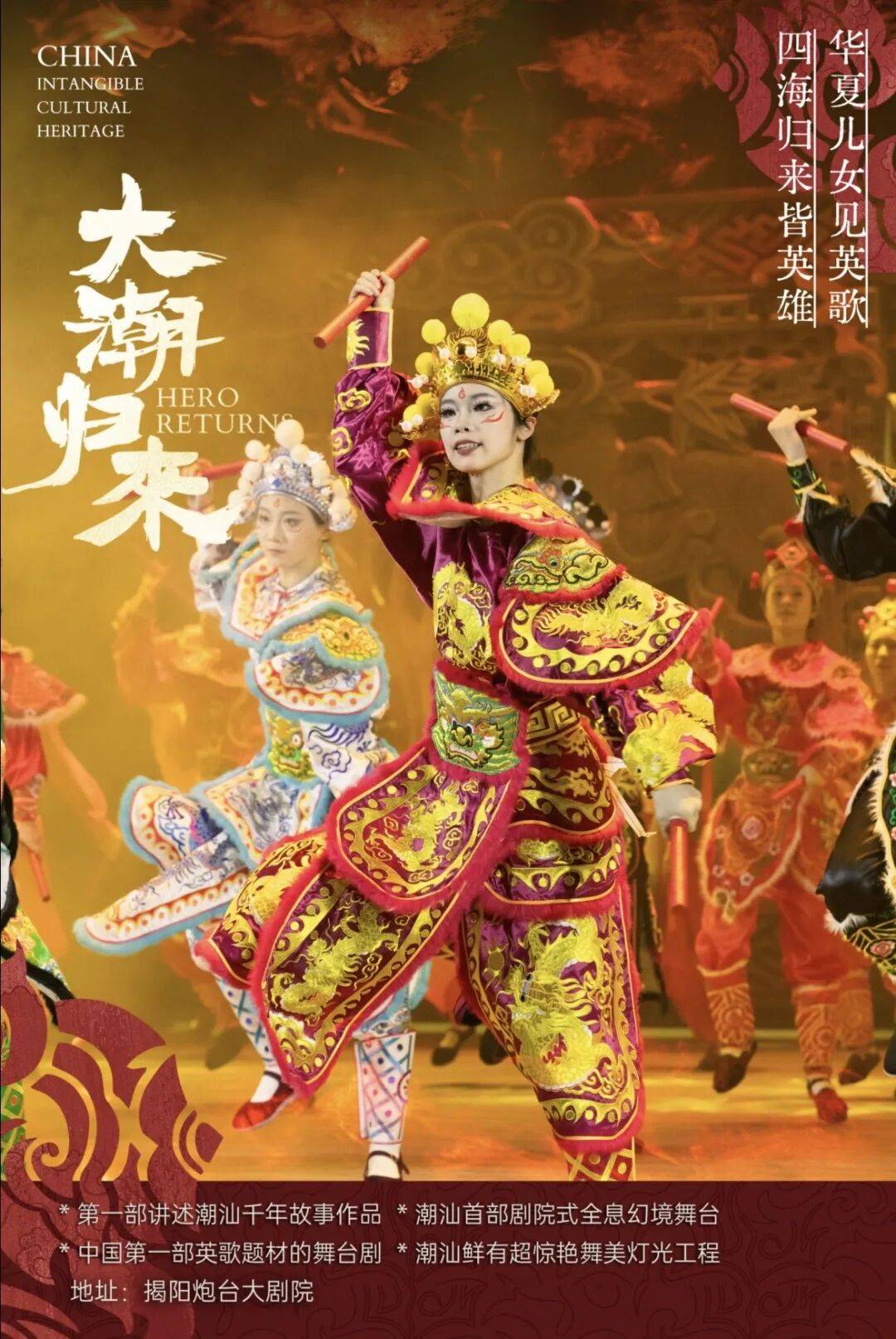
Yingge Dance (英歌舞) is arguably Chaoshan’s most spectacular folk performance. Dancers paint their faces like the 108 heroes from the Chinese classic Water Margin, wielding short sticks and moving in powerful, rhythmic formations to the thunderous beat of drums and gongs. Known as “China’s Battle Dance,” Yingge has exploded in popularity on social media, garnering billions of views and drawing international visitors eager to witness this electrifying spectacle during Lunar New Year celebrations.
Ying Laoye: The Grand Procession of the Gods
Each year during the Spring Festival, Chaoshan villages hold “Ying Laoye” (营老爷)—a grand procession where sacred statues of patron deities are carried through the streets on elaborate palanquins. The event features lion dances, dragon dances, banner teams, and the thunderous Chaoshan Grand Drum Ensemble. The climax, known as “Running with the Gods,” sees young men sprinting with the deity palanquins through fields and alleyways—a heart-pounding display of devotion and community spirit.
Architectural Marvels: From Temples to Ancestral Halls
Chaoshan’s architectural heritage is equally impressive. The Guangji Bridge in Chaozhou—one of China’s Four Great Ancient Bridges—features a unique design combining beam bridges, arch bridges, and a floating pontoon section that is dismantled daily to allow boats to pass. The intricate Chaozhou wood carvings at Jilue Huanggong Shrine display up to seven layers of hollowed relief, while the vibrant ceramic inlay (嵌瓷) on temple rooftops has remained unfaded for centuries.
Plan Your Visit
- Best Time: October to April for pleasant weather; Lunar New Year for the richest cultural experience
- Getting There: Jieyang Chaoshan International Airport (SWA) connects to major Asian cities; high-speed rail from Shenzhen (2 hours), Guangzhou (3 hours), and Xiamen (1.5 hours)
- Where to Stay: Chaozhou Ancient City area for heritage vibes; Shantou seaside for modern comfort
- Language: Teochew dialect is the local language; Mandarin is widely spoken; basic English is available at major hotels and tourist sites
Chaoshan is not just a destination—it is an experience that engages all your senses. From the first sip of fragrant Gongfu tea to the last bite of tender beef hotpot, from the thunderous drums of Yingge dance to the serene beauty of ancient temples, Chaoshan offers a journey into the heart of authentic Chinese culture that will stay with you long after you have returned home.
Come, discover the magic of Chaoshan.